Are Eco-Friendly Bali Villas a Better Investment?
Eco-friendly Bali villas attract sustainability-minded guests and cut running costs. Here is what the investment case actually looks like for a foreign buyer.
Eco-friendly villas in Bali attract a growing segment of guests who actively seek sustainable accommodation, and demand for those stays is real. Whether that demand translates into consistently higher returns than a conventional villa is less certain. The investment case rests on a potential rate premium, lower running costs, and differentiated appeal in a crowded market.
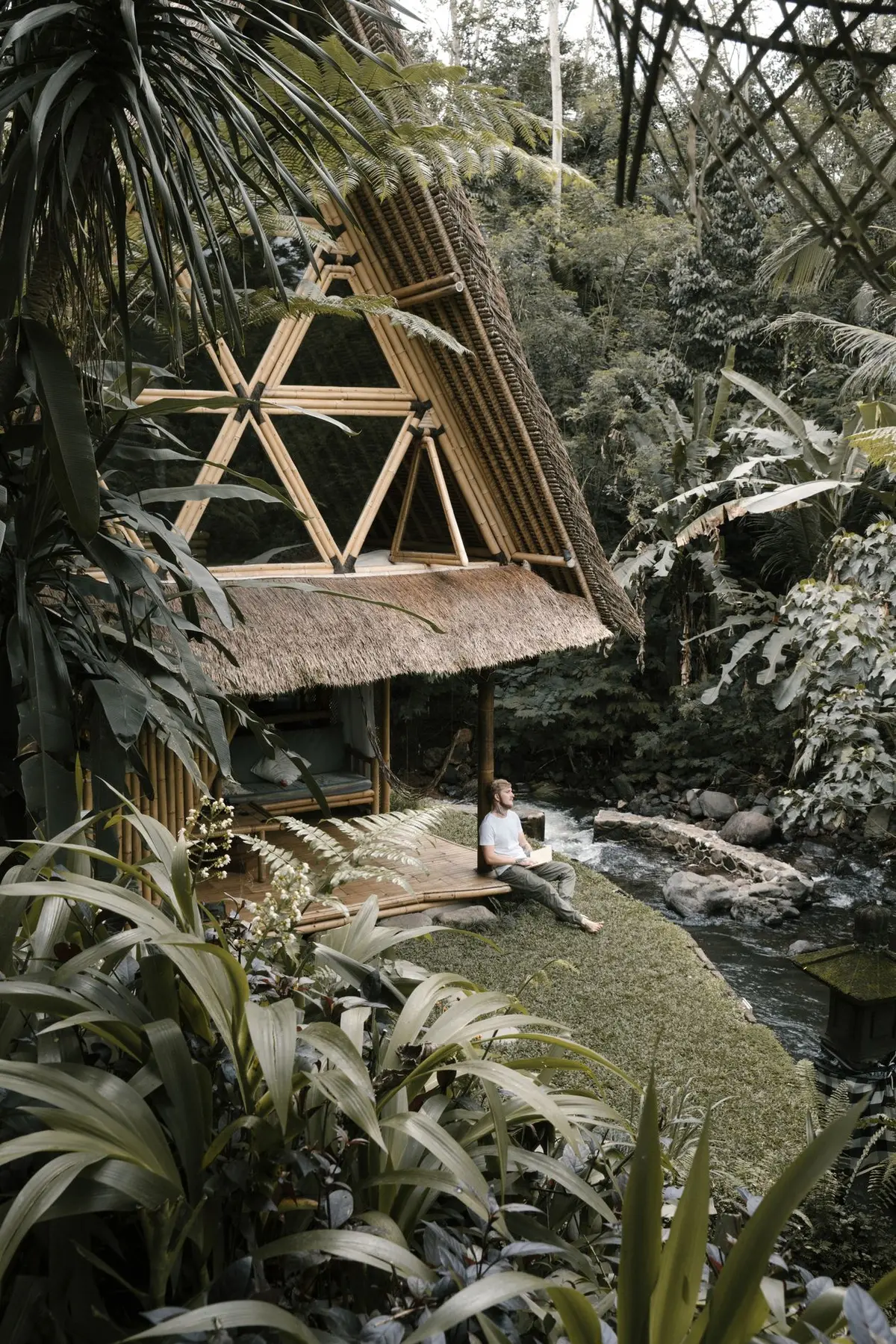
Sustainable features in a Bali villa typically include bamboo or reclaimed-timber framing, rooftop solar panels, rainwater harvesting, greywater recycling, and natural ventilation that reduces air conditioning load. A 2023 Booking.com Sustainable Travel Report found that 43 percent of travelers worldwide said they would pay more for accommodation with a sustainability certification. That is a meaningful signal, but stated intent and actual booking behavior are not the same thing.
Indonesia has its own green building rating system, GREENSHIP, run by the Green Building Council Indonesia. Certification is voluntary for private villas and uptake in Bali remains low. A 2024 study of villa development in Badung Regency found green building implementation averaging around 64 percent, with solar and energy efficiency as the main gaps. Unclear certification criteria were identified as the primary obstacle to broader adoption.
On running costs, rooftop solar systems can offset a material share of PLN grid electricity, which is billed at commercial tariffs for short-term rental properties. Reducing that ongoing bill improves net yield. The payback period depends on system size, panel quality, and occupancy, but solar is now common in new Bali developments rather than a premium add-on. Rainwater capture and greywater recycling similarly reduce monthly utility costs in areas where PDAM water supply is intermittent.
The resale case is harder to verify. Bali agency sources cite premiums of 10 to 15 percent for eco-positioned properties, but those figures are not confirmed by independent market data. Eco-positioned villas do tend to attract longer average stays and repeat bookings from sustainability-minded travelers, a guest segment growing faster than leisure-only visitors.
Location and professional management still drive the majority of returns. An eco villa in a weak rental corridor will not outperform a well-managed conventional villa near Canggu or Tabanan. Treat green features as a differentiator that supports marketing and reduces operating costs, not as a standalone investment thesis. This is not financial advice; returns depend on property specifics, location, and management quality.
Frequently asked questions
Do eco villas command higher nightly rates in Bali than conventional villas?
Demand for sustainable stays is growing: a 2023 Booking.com survey found 43 percent of travelers would pay more for eco-certified accommodation. In practice, the rate premium for a Bali eco villa depends on marketing and management. Agency sources suggest 10 to 15 percent above comparable conventional villas, but that figure is not confirmed by independent market data.
What makes a Bali villa count as sustainable and does it affect resale value?
Common features include bamboo or reclaimed-timber construction, rooftop solar panels, rainwater harvesting, greywater recycling, and passive cooling design. Indonesia has a voluntary green building certification called GREENSHIP, run by the Green Building Council Indonesia, though private villa uptake in Bali is low. A resale premium for eco features is claimed by agency sources but is not independently verified.
What are the upfront and ongoing cost differences for a green-built Bali villa?
Green features add to the initial build cost through solar panel systems, sustainable materials, and water management infrastructure. The offsetting benefit is lower ongoing utility costs: rooftop solar reduces reliance on PLN commercial electricity tariffs. Bamboo structure requires specific maintenance to prevent moisture damage, so budget for annual treatment costs alongside the utility savings.
Sources
- Booking.com Sustainable Travel Report 2023 via Green Key Global: 43 percent of travelers worldwide would pay more for accommodation with a sustainability certification; 65 percent feel better about staying somewhere with a green label (Tier 2: industry sustainability certification body citing Booking.com annual survey of 30,000 plus travelers)
- Green Building Council Indonesia (GBCI) - GREENSHIP: Indonesia's national voluntary green building rating system; applicable to residential and commercial buildings; private villa certification uptake in Bali remains low as of 2024 (Tier 1: Indonesian industry standards body aligned with government green building policy)
- Jurnal Permukiman (Indonesian Ministry of PUPR settlement research journal) - Green Building Assessment of Villas in Badung Regency, Bali (2024): study of villa projects found average green building implementation rate of 64.24 percent; main obstacles were unclear certification criteria and limited government outreach on energy savings and eco materials (Tier 2: peer-reviewed government settlement research journal)
This article is general information, not financial, legal or tax advice. Any yield, price or appreciation figures are ranges and not guarantees. Confirm current pricing, ownership structures and regulations with the OMA Townhouse team and a qualified adviser before you commit.